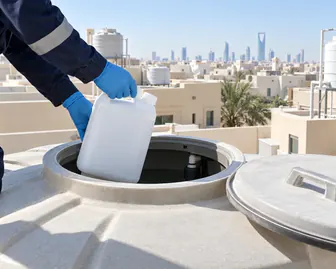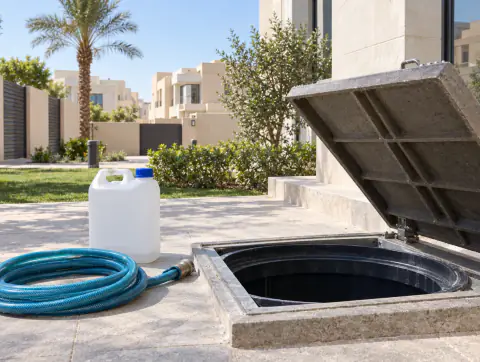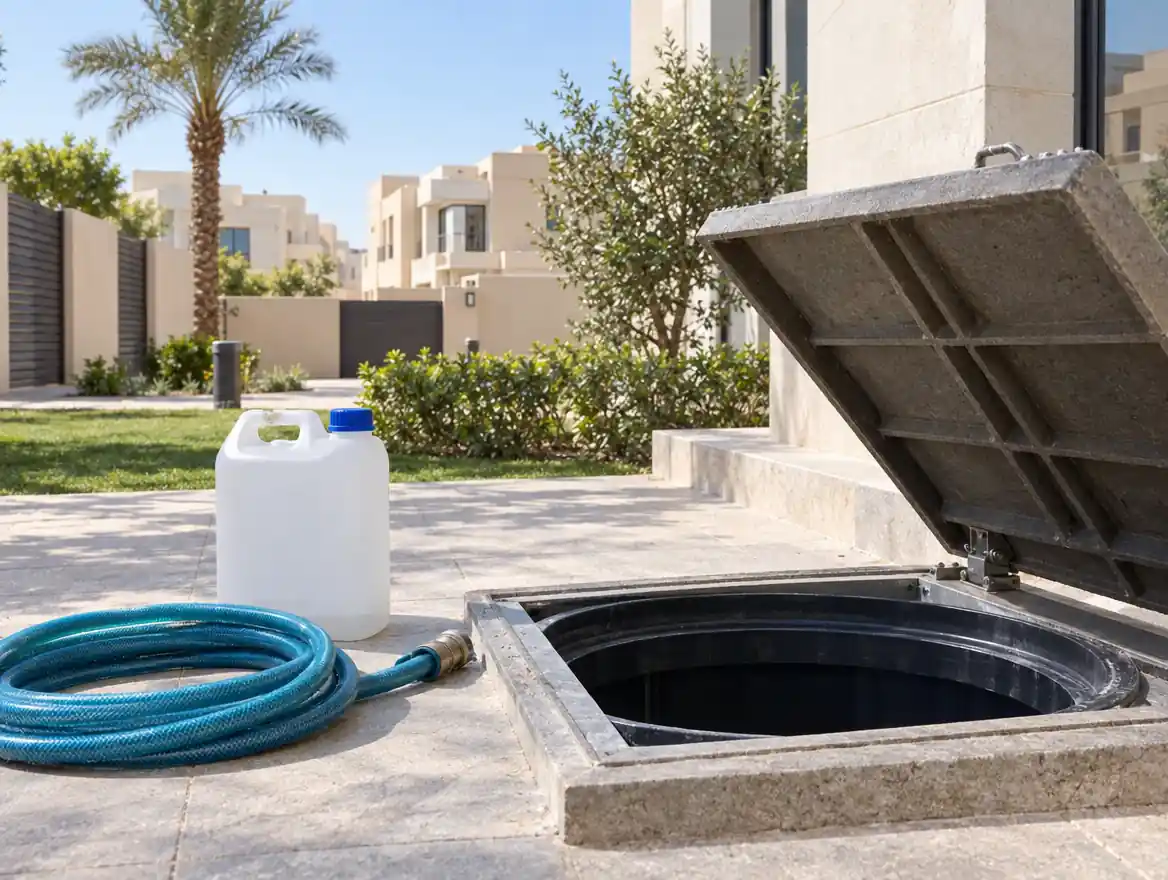
What does ground-tank disinfection cover?
A ground tank is usually built from concrete or fibreglass and buried beneath the floor or the ground. The high heat and moisture typical of surround it on all sides, creating conditions for green algae to grow on the inner walls and for calcium and limescale to settle on the floor and around the pipe connections. Because the hatch is closed, this build-up stays completely hidden until someone opens it and looks inside.
We take care of disinfecting your ground tank after you tell us what you have noticed, whether that is an odd taste, an unfamiliar smell, or simply a wish for a routine clean. Call or message us on WhatsApp, tell us your district and the tank material if you know it, and we agree a time.
These are the parts the work goes through inside the ground tank and at its connections, depending on its condition and what you notice.
- Inner walls
We remove algae and deposits stuck to the walls, because they grow on concrete and fibreglass surfaces in the dark and damp and affect the water.
- Tank floor
Limescale, sand and heavy sediment settle on the floor of a ground tank over time, and we clear them before disinfecting so they do not return to the water.
- Hatch cover and rim
We check and wipe the hatch cover and its rim, because any gap in the seal lets dust and soil insects enter the tank.
- Inlet and outlet connections
Calcium deposits gather around the pipe openings and narrow the water flow, and we make sure they are clean during the work.
- Internal ladder or access steps
The metal or concrete ladder inside the tank collects limescale and algae around it, and we clean it as part of the disinfection so it does not remain a source of contamination.
- External surface around the hatch
We wipe the area around the hatch opening on the outside so that dirt does not fall in when the cover is opened next time.
Four steps, and done
- 1
Call or message us on WhatsApp
+966 54 084 3018 - 2
Tell us what you notice
Tell us if you notice an odd taste or smell in the water, when the tank was last cleaned, whether it is concrete or fibreglass, and which district you are in.
- 3
We agree a time and you prepare
We settle on a suitable time, and it is best to drain the tank before the visit or leave it at its lowest level, and keep the hatch area clear and accessible.
- 4
We work and you check after
We disinfect the walls, floor and connections and close the hatch, then you wait the agreed period before running the water and check the smell and taste afterwards.
Some of our work












What our customers say
Real Google Maps reviews, word for word.
يعطيكم العافيه.. شغل ممتاز يستاهلون ٥ نجوم
Google Maps شركة نظافة ممتازة يعطيكم العافيه
Google Maps افضل عمال وتنظيف روووعة يعطيكم العافية
Google Maps
Questions about Ground-tank disinfection
How do I know my ground tank needs disinfecting now?
Clear signs include an unfamiliar taste, an earthy or musty smell, or water with a yellowish or greenish tint. If the tank has been closed for a long time, sediment and algae may have settled on the walls and floor even when the water looks clear, and the tank is worth checking.
Does disinfecting a concrete ground tank differ from a fibreglass one?
Concrete is rough and porous, so algae and deposits grip it more firmly and need more care to remove. Fibreglass has a smooth surface but can be scratched by harsh scrubbing. That is why we ask about your tank material when you call, so the work is prepared the right way.
Does the ground tank need to be fully empty before disinfection?
Emptying it fully or bringing it to the lowest possible level makes working inside the tank much easier and allows the floor to be cleaned properly. The details of how to prepare are agreed when you call, depending on the size and condition of the tank.
What should I check after the ground tank is disinfected?
After the agreed disinfection period and refilling the tank, check that the water has no smell or odd taste, and that the hatch is sealed tightly with no gap for dust to enter. A faint smell immediately after is usually residual disinfectant and fades as the water flows.
Does the depth or position of the ground tank affect what I pay?
Yes, the depth of the tank and how easy the hatch is to reach affect the nature of the work. A deep tank or one in a tight space needs different preparation from a shallow tank with a wide opening. The price depends on these details and is agreed after you describe your tank.