Which insulation suits your tank?
A tank exposed to the summer sun goes through repeated expansion and contraction in its walls, whether it is concrete, steel or fibreglass. Each heat cycle leaves a mark on the material: hairline cracks and fissures that let water seep outward, or let ground moisture into underground tanks, so the water becomes contaminated or is lost without you realising.
Some homeowners reach for tank insulation paint or cement tank insulation to close the cracks, and both are real options, but the choice of material and method depends on the type of tank, where it sits and the condition of its walls. A rooftop tank needs a different approach from a ground tank whose walls touch the soil, and an old concrete tank is nothing like a modern fibreglass one.
Call or WhatsApp us and tell us the type and position of your tank, the district you are in, and what you have noticed, whether a leak, a smell or a change in the water. We agree a time with you and take care of the work from inspection to completion.
Choose by your tank's type and position; each service suits a specific material and location.
- Ground-tank insulationWhen your tank is buried underground and you notice damp on nearby walls or a drop in the water level.
- Epoxy tank insulationWhen you need a hard, waterproof lining inside the tank to stop leaks through the walls and base.
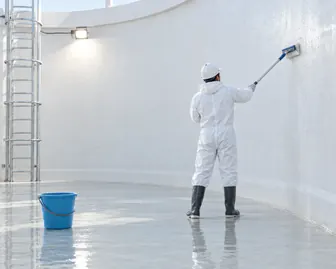
- Inside-tank insulationWhen you want the inside walls of the tank treated to stop cracking and protect the water from contamination caused by surface wear.
- Concrete-tank insulationWhen your tank is built from concrete and its walls are showing hairline cracks or damp patches on the outside.
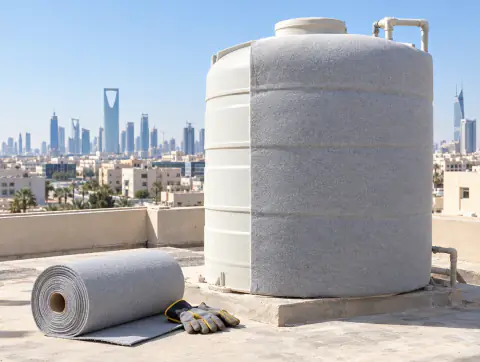
- Outside-tank insulationWhen you want the outer wall of the tank protected from heat expansion and sun without emptying the tank of water.
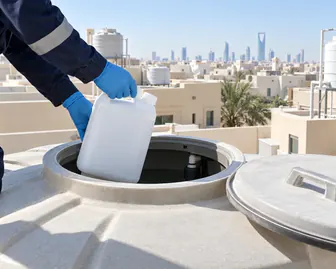
- Rooftop-tank insulationWhen your tank sits on the roof and is exposed to the summer heat, making the water warm quickly or causing a leak at the base.
- Fibreglass tank insulationWhen your tank walls are fibreglass and are starting to show spots or fine cracks that weaken their resistance to water.
- Steel tank insulationWhen your tank is metal and you notice rust on the surfaces, leaks at the welds or corrosion at the base.
What sets Al 'Attar apart
Al 'Attar is a village with family homes and farms spread over wide open land, each house having a courtyard and open space around it. Water tanks here face intense heat, humidity and direct sun, causing cracks and leaks and affecting water quality. Insulation protects the tank from these effects and extends its life. When you call, tell us where the tank is, its size and any problems you notice, so we visit and arrange insulation based on your home's needs.
Al 'Attar is a village in the Riyadh region; you order by call or WhatsApp, and a time is agreed for tank assessment and insulation.
In villages, reaching the tank may need arranging, especially if it is on the roof or in a far part of the courtyard.
Four steps, and done
- 1
Call or message us on WhatsApp
+966 54 084 3018 - 2
Tell us about your tank
Tell us the tank type and position, ground or rooftop, the material it is made from, what you have noticed such as a leak or change in the water, and which district you are in.
- 3
We agree a time
We settle on a time that suits you, and you arrange easy access to the tank and empty it of water if we ask for that when we agree.
- 4
Inspect, work and check
We inspect the tank walls and locate any cracking or leaking, then insulate with the method suited to its type, and after finishing we verify the seal is sound before the tank is filled again.
Some of our work












What our customers say
Real Google Maps reviews, word for word.
صراحة ممتازين جدا ويهتمون بأدق التفاصيل .. وجدا متعاونين الله يباركلهم .. من أفضل الشركات اللي تعاملت معاها
Google Maps يعطيكم العافيه.. شغل ممتاز يستاهلون ٥ نجوم
Google Maps شركة نظافة ممتازة يعطيكم العافيه
Google Maps
Questions about Water tank insulation
How do I know my tank needs insulating?
Clear signs include damp or wet patches on walls near a ground tank, a leak appearing at the base of a rooftop tank, or a recurring drop in the water level for no obvious reason. In summer, water in exposed rooftop tanks can heat up very fast, which is another sign that the tank needs attention.
What is the difference between inside and outside tank insulation?
Inside insulation treats the wall on the side that touches the water directly, to stop leaks through the wall and protect the water from surface corrosion. Outside insulation protects the wall from heat, expansion and contraction caused by the wide temperature swings, and in concrete tanks the two are often combined.
Do I need to empty the tank before work starts?
Usually yes for inside insulation, because the internal walls cannot be treated with water in the tank. Outside insulation may not always require full emptying. When you call, we ask about the tank type and position and tell you exactly what is needed.
What should I check after the insulation is done?
After refilling, watch the outer walls for a few days to confirm there is no new damp or seepage. On rooftop tanks, monitor the water level: if it keeps dropping there may be another point that needs treating. It is also a good idea to have the tank cleaned and disinfected before using the water again after insulation work.
How does concrete tank insulation differ from fibreglass tank insulation?
Concrete is naturally porous and absorbs moisture, so it needs an insulation material that closes the pores and resists the high alkalinity of concrete. Fibreglass is non-porous but can crack at stress points and joints, and the right insulation material differs accordingly. That is why we ask for the tank type when you call before anything else.
Does tank insulation paint work for all tank types?
Tank insulation paint is a common choice because it is applied quickly and covers large surfaces, but how well it works depends on the tank type, the condition of the surface and the extent of the cracking or leaking. On tanks where cracks go deeper than the surface, it may be combined with a thicker layer or a different material. The details become clear after inspecting the tank.
Is cement tank insulation different from epoxy?
Yes, cement tank insulation uses a specialised cement slurry brushed or sprayed onto the wall, bonding with the concrete to close the pores. Epoxy is a resin material that hardens into a solid, non-porous layer with greater resistance to pressure and moisture. Choosing the right one depends on your tank's condition and the symptoms you describe when you call.
Does insulation prevent the water tasting off in the heat?
Yes, intense heat affects water quality and taste, and insulation protects the tank so the water stays in better condition. Tell us when you call of any changes you notice so we choose the best approach.
How long does insulation take in a village like Al 'Attar?
The time depends on the tank's size, where it is and its condition, and details are agreed with you during the visit. Tell us about the location and any access issues.
More services in Al 'Attar