What does wasp control cover?
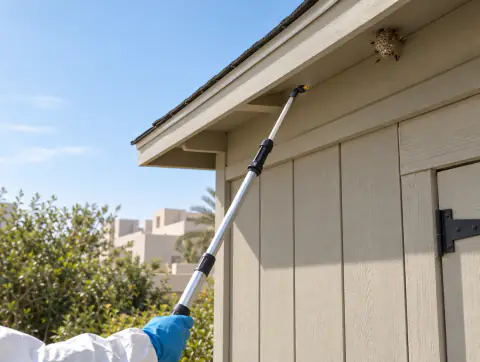
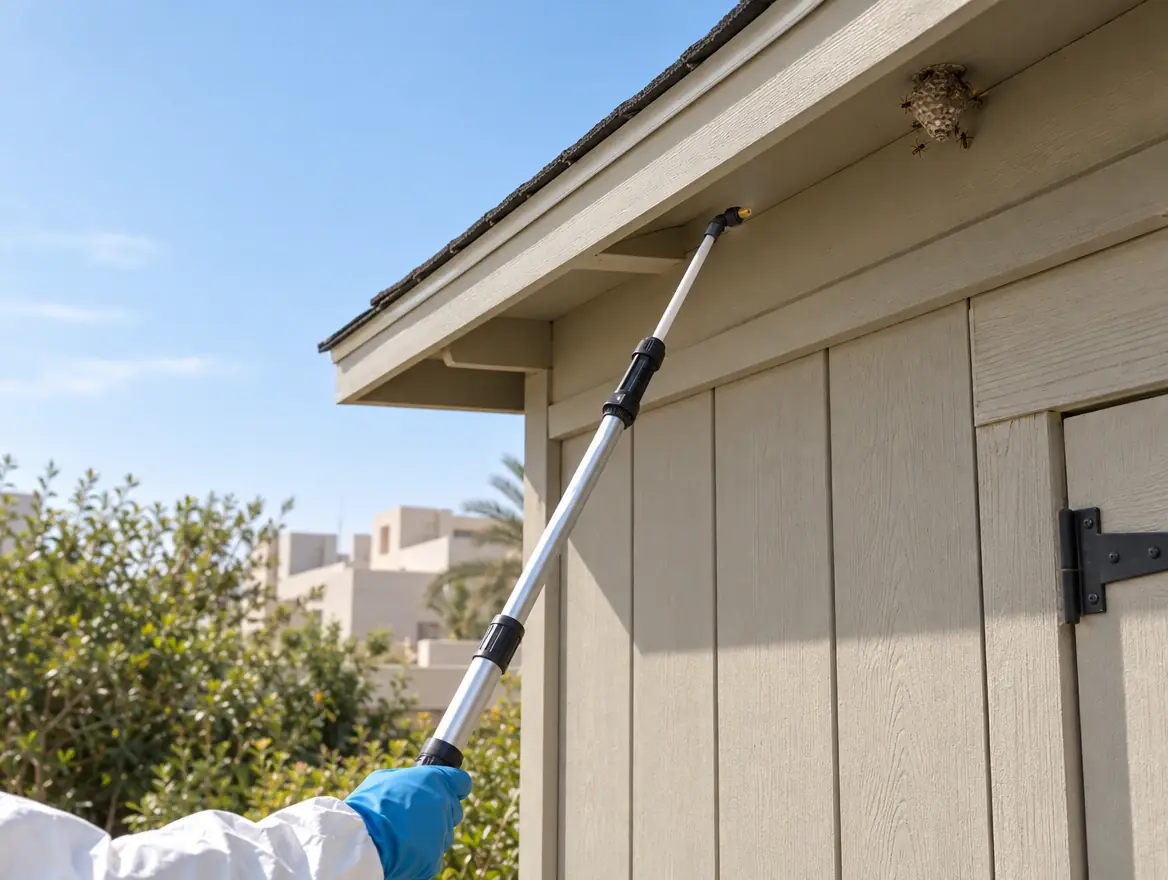
Wasps build their nests from chewed wood fibres and hang them under ceilings, shade canopies, inside wall cracks and within cavities. They become more active as the heat rises, searching for water and shade near doors, windows and villa gardens. A nest that looks small early in the season can grow considerably within a few weeks.
Tell us what you have noticed: buzzing inside a wall or ceiling, or a visible nest, and which district you are in. We agree a time with you, then locate, treat and remove the nest.
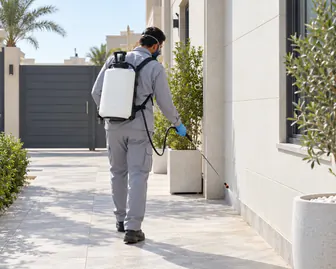
These are the stages the work goes through, from inspection to treating the surrounding area, depending on where the nest is and how large the colony has grown.
- Locating the nest
We inspect ceilings, cracks, cavities and canopy corners, because the nest is often inside a wall cavity rather than visible to the eye.
- Treating the nest
The nest is treated in place before it is removed, because removing it without treatment first stirs the wasps and makes handling them harder.
- Removing the nest
Once the colony has quietened, the nest is removed in full, since leaving it even after the wasps are gone can attract other insects.
- Checking cracks and cavities
We check nearby cracks and openings that might hold a second colony or serve as an entry point for a nest inside a wall that has not been noticed yet.
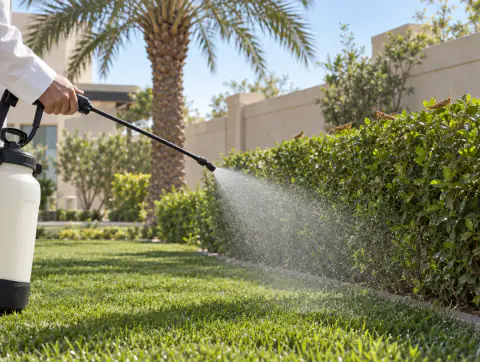
- Treating the surrounding area
The surfaces and corners around the nest site are treated to deter any wasps that return to the spot after the work is finished.
- Checking outdoors and canopies
In villas and buildings with gardens we check shade canopies, exterior ceilings and dense plants where wasps often choose to nest.
Four steps, and done
- 1
Call or message us on WhatsApp
+966 54 084 3018 - 2
Tell us what you have noticed
Describe what you saw or heard: buzzing in a wall, a visible nest, where the wasps are gathering, and which district you are in.
- 3
We agree a time
We settle on a time that suits you, and we ask you to keep children and pets away from the area and close nearby windows before the appointment.
- 4
We start the work
We treat and remove the nest and inspect the surrounding area. Let us know if you notice any activity at the same spot in the following days.
Some of our work
What our customers say
Real Google Maps reviews, word for word.
افضل عمال وتنظيف روووعة يعطيكم العافية
Google Maps شركة نظافة ممتازة يعطيكم العافيه
Google Maps يعطيكم العافيه.. شغل ممتاز يستاهلون ٥ نجوم
Google Maps
Questions about Wasp control
How do I know what I see is a wasp nest and not a bee nest?
A wasp nest is made from a paper-like grey or light-brown material and looks hollow inside when cut open, while a bee hive is built from yellow wax and filled with comb. If you are not sure, describe what you see when you call and we help you identify it.
Why do wasps come back to the same spot after the nest is removed?
Wasps that were away from the nest during treatment return to their usual spot because they were not exposed to it. That is why the surrounding surfaces are treated as well to deter them. If activity continues, let us know when you call.
What should I prepare at home before the wasp control appointment?
Keep children and pets away from the nest area and close windows and doors near it. If the nest is high up or inside a narrow cavity, tell us beforehand so we can prepare to reach it.
Does seeing wasps near the window mean the nest is inside the wall?
Not necessarily, as wasps search for water and shade and may simply be passing through the area. But if you notice wasps entering and leaving a crack in the wall or frame regularly, that is a sign of a nest inside, and it is something we check when we visit.
Does the size of the nest change how the work is done or what it costs?
Yes, the location of the nest, its size and how accessible it is are among the factors that affect the details of the work and the agreed price. That is why we ask you exactly what you have noticed when you call, so we can agree on what suits your situation.
More services under Pest control