What does kitchen marble cleaning cover?
Kitchen marble faces grease, spices, lemon juice and steam every day, and unlike its appearance it is not a sealed surface. Its fine pores absorb those substances and trap them below the surface, and yellow or grey marks appear that neither a damp cloth nor acidic cleaners can remove; acidic products roughen the stone and dull its sheen instead.
We start by hearing what you notice on your marble, then we look at the surface, the grout joints, the sink surround and the area around the hob. We clean in a way that matches the type and condition of the stone. Call or WhatsApp us, tell us your district and what is bothering you about your kitchen marble, and we agree a time.
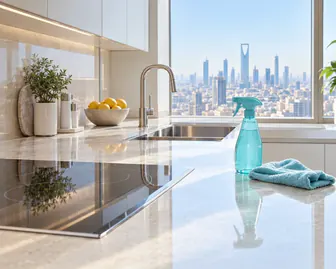
These are the parts the cleaning covers in kitchen marble, depending on the type of stone, its condition and what you notice on it.
- The worktop
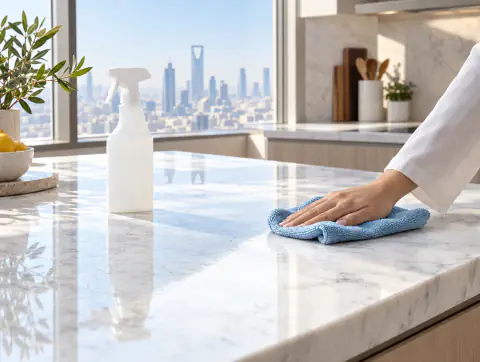
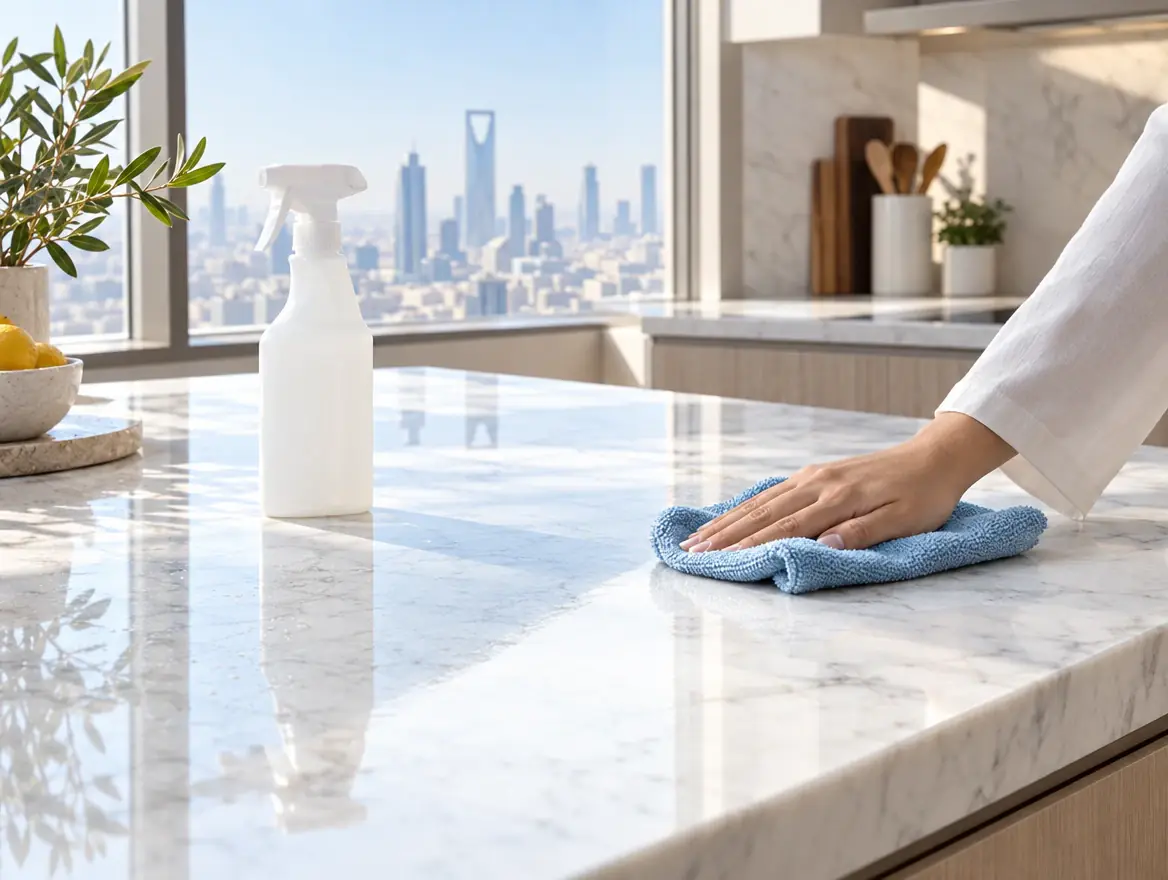
We remove grease and accumulated marks from the marble surface in a way that suits its porous nature, without anything that roughens the stone's grain or dulls its finish.
- The grout joints
Grout joints collect food residue and grease more than the surface itself, and we clean them carefully because a change in their colour affects the look of the whole marble.
- The sink surround
Marble around the sink faces standing water and calcium deposits, and we remove those white marks without harming the stone surface.
- Around the hob
Grease splashed during cooking settles on the marble beside the hob and bakes on over time; these are among the hardest marks on kitchen marble and need particular attention.
- Edges and corners
The edges and corners of the marble worktop collect grime that a regular wipe does not reach, and we clean them because they are clearly visible from the side.
- The marble splashback
If the kitchen's back wall is clad in marble it absorbs cooking steam and splattered grease, and we include it in the clean when it is there.
Four steps, and done
- 1
Call or message us on WhatsApp
+966 54 084 3018 - 2
Tell us what you notice
Describe the marks on your marble, whether grease, yellow stains or white deposits, and tell us your district and the approximate size of the marble area.
- 3
We agree a time and you prepare
We fix a time that suits you, and before we arrive you clear the marble surface of utensils and small appliances so the whole surface is easy to reach.
- 4
We work and you check after
We clean the surface, joints, sink surround and hob area, and when we finish ask us to revisit anything you noticed before the clean to make sure it is gone.
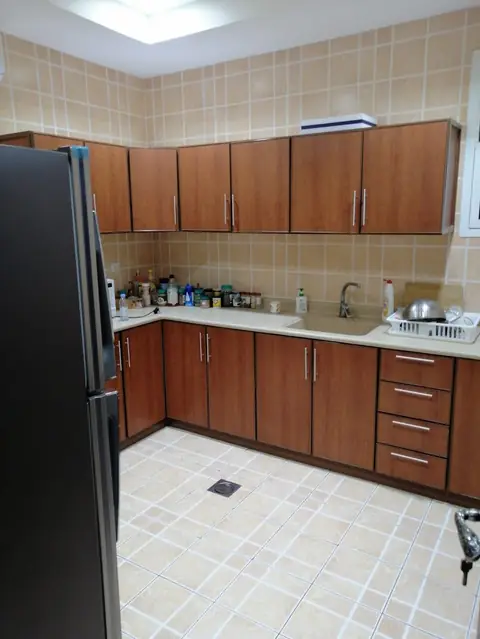
Some of our work












What our customers say
Real Google Maps reviews, word for word.
صراحة ممتازين جدا ويهتمون بأدق التفاصيل .. وجدا متعاونين الله يباركلهم .. من أفضل الشركات اللي تعاملت معاها
Google Maps يعطيكم العافيه.. شغل ممتاز يستاهلون ٥ نجوم
Google Maps شركة نظافة ممتازة يعطيكم العافيه
Google Maps
Questions about Kitchen marble cleaning
The yellow marks on my marble are old, can they be removed?
In many cases yes, but it depends on how deep the material has gone into the marble's pores and the type of stone. Old grease and spice stains penetrate deeper than fresh ones and may need a marble polishing session after cleaning to restore the surface. We assess the condition when we arrive and tell you what is achievable.
Does wiping marble with lemon juice or vinegar damage it?
Yes, marble reacts with acids even natural ones. Lemon juice and vinegar dissolve the calcite layer on the surface and leave marks that look like dullness or a rougher texture. This is a common mistake in kitchens because those materials are always to hand. For everyday wiping, warm water and a soft cloth are enough.
When do I need marble polishing after the cleaning?
Cleaning removes dirt and marks from the surface, while polishing restores the marble's sheen and closes its surface pores after years of use or exposure to acidic materials. If the shine on your marble has gone even after cleaning, polishing is the next step, and the same team does it.
Does dark kitchen marble need a different approach from light marble?
Dark marble shows white calcium deposits and scratches more clearly than light marble, but the main difference is the type of stone and how it was treated. Some dark marble types are more sensitive to moisture than others, so we ask you about the stone type or colour when you get in touch.
Is the marble on the wall cleaned the same way as the worktop?
The marble splashback faces more steam and grease splatter than the worktop but does not take the same mechanical pressure on it. The approach adapts to the position and condition of the stone, and we agree on the details when you describe your marble to us.
More services under Kitchen cleaning