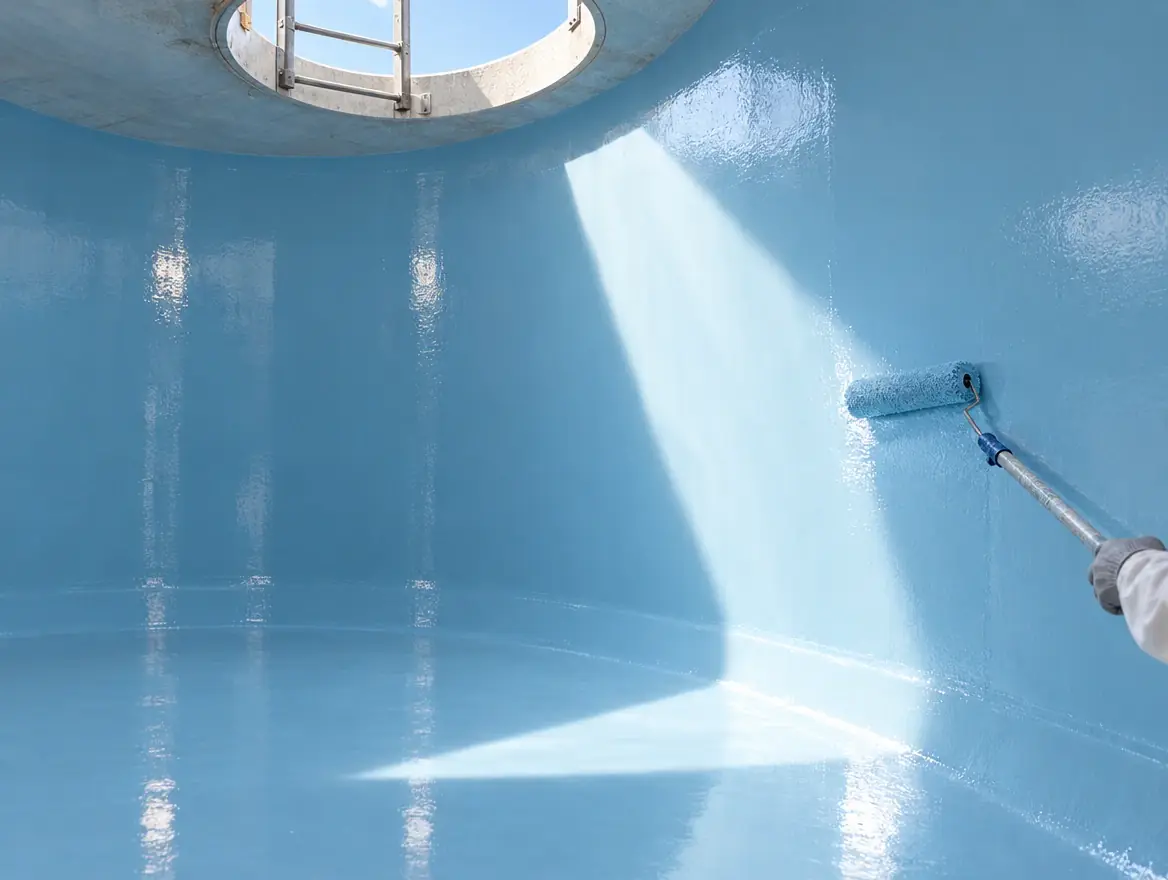
What does epoxy tank insulation cover?
Concrete water tanks develop a network of fine cracks over time, invisible to the eye, formed as the concrete expands in the intense summer heat and contracts again at night. Epoxy is a hard material brushed onto the interior walls, the floor and the corners while the concrete is still slightly damp; it works its way into those cracks and sets into a dense, water-impermeable layer.
Start by telling us about your tank, which district you are in, and whether it is a rooftop or underground tank. We then agree a time. Empty the tank before our visit and make sure the entry hatch or descent point is accessible. Once the work is done, check the corners and joints in particular, as those are the spots where leaks tend to begin.
These are the parts the work goes through in your tank, depending on its condition and the leaks or damp you have noticed.
- Surface preparation
Old coatings, deposits and loose concrete are removed before the epoxy goes on, because it will not bond to a flaking surface or one covered in algae.
- Interior walls
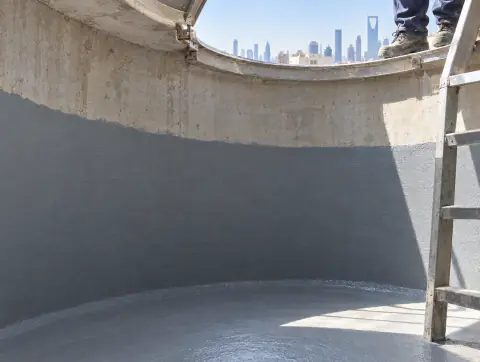
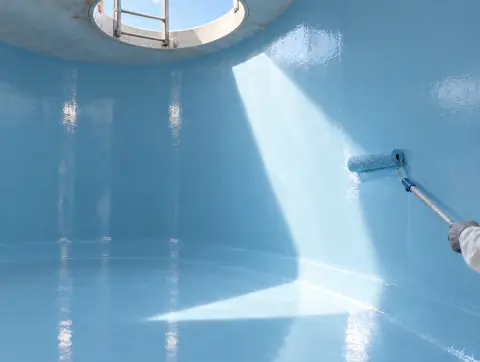
The walls receive one or more coats of epoxy depending on the condition of the concrete and the depth of visible and hidden cracks.
- Floor and base
The tank floor takes the full weight of the water and is the most crack-prone surface, so it receives particular attention when the epoxy is applied.
- Corners and joints
The wall-to-floor joints and internal corners open up under heat and are treated with a filler or a double coat of epoxy to stop leaks from starting there.
- Pipe inlets and outlets
Pipe entry and exit points are common leak sites because the concrete moves around them, and they are treated carefully as part of the epoxy work.
- Check after completion
The tank is filled with water after the coating dries and left for an agreed period before use; then check corners and joints to confirm there is no seeping.
Four steps, and done
- 1
Call or message us on WhatsApp
+966 54 084 3018 - 2
Tell us about your tank
Tell us whether the tank is rooftop or underground, its approximate size, what you have noticed, and which district you are in.
- 3
We agree a time and you prepare
We settle on a time that suits you, and you empty the tank completely and make sure the hatch or entry point is accessible for the work.
- 4
We work and you check after
We prepare the surface and apply epoxy to the walls, floor, corners and joints. After the coating dries, check the corners and pipe lines before refilling the tank.
Some of our work













What our customers say
Real Google Maps reviews, word for word.
افضل عمال وتنظيف روووعة يعطيكم العافية
Google Maps يعطيكم العافيه.. شغل ممتاز يستاهلون ٥ نجوم
Google Maps شركة نظافة ممتازة يعطيكم العافيه
Google Maps
Questions about Epoxy tank insulation
Is epoxy right for my old concrete tank?
Yes, old concrete tanks are the ones that need it most. Over time fine cracks form in the concrete that the eye cannot see, and epoxy works its way in and sets hard. If there are loose sections or old coatings, these are removed first before the new coat goes on.
How do I prepare for the epoxy insulation appointment?
The most important step is to empty the tank completely before our visit. Also make sure the top hatch or internal entry point is accessible. If the tank is on the rooftop, check that the route up to it is clear.
What do I check after the epoxy insulation is done?
After the drying period and refilling, check the corners, wall-to-floor joints and pipe lines. Look for any seeping or damp patch in the ceiling below if the tank is overhead. No sign of those means the coating has set well.
When is epoxy the better choice for my tank compared with other options?
Epoxy suits concrete tanks with multiple fine cracks or a worn interior surface, because the material works into those cracks and sets hard. If the leak is at one specific point or the tank is made of another material such as fibreglass or steel, a different approach may be more suitable. What fits your tank depends on its condition and type, and that is what we discuss when you call.
Will the water taste different after the epoxy coating inside?
Epoxy formulated for drinking-water tanks sets into an inert layer that does not react with water. The coating must be left to dry fully before refilling, and the right duration is agreed when we confirm the appointment. After filling, if you notice any unusual taste, draining and refilling once is the recommended step.
More services under Water tank insulation