What does inside-tank insulation cover?
The inner wall of a tank is the first surface that water is always in contact with, and the intense summer heat adds stress to concrete that is already under constant pressure. Fine cracks form on the surface and gradually widen. Water does not wait: it enters the narrowest crack and pushes it open from within, and dampness may not appear on the outside until the tank has already been losing water for some time.
We start from what you notice: an unexplained drop in water level, damp patches on the ceiling directly below, or a change in the water's taste through the summer months. Call or message us on WhatsApp, tell us your district, the tank size and type as best you can, and we agree a time that suits you.
These are the surfaces and parts the work goes through inside the tank, depending on its condition and what is found in it.
- Interior walls
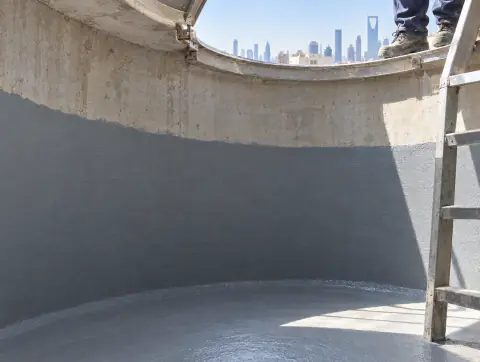
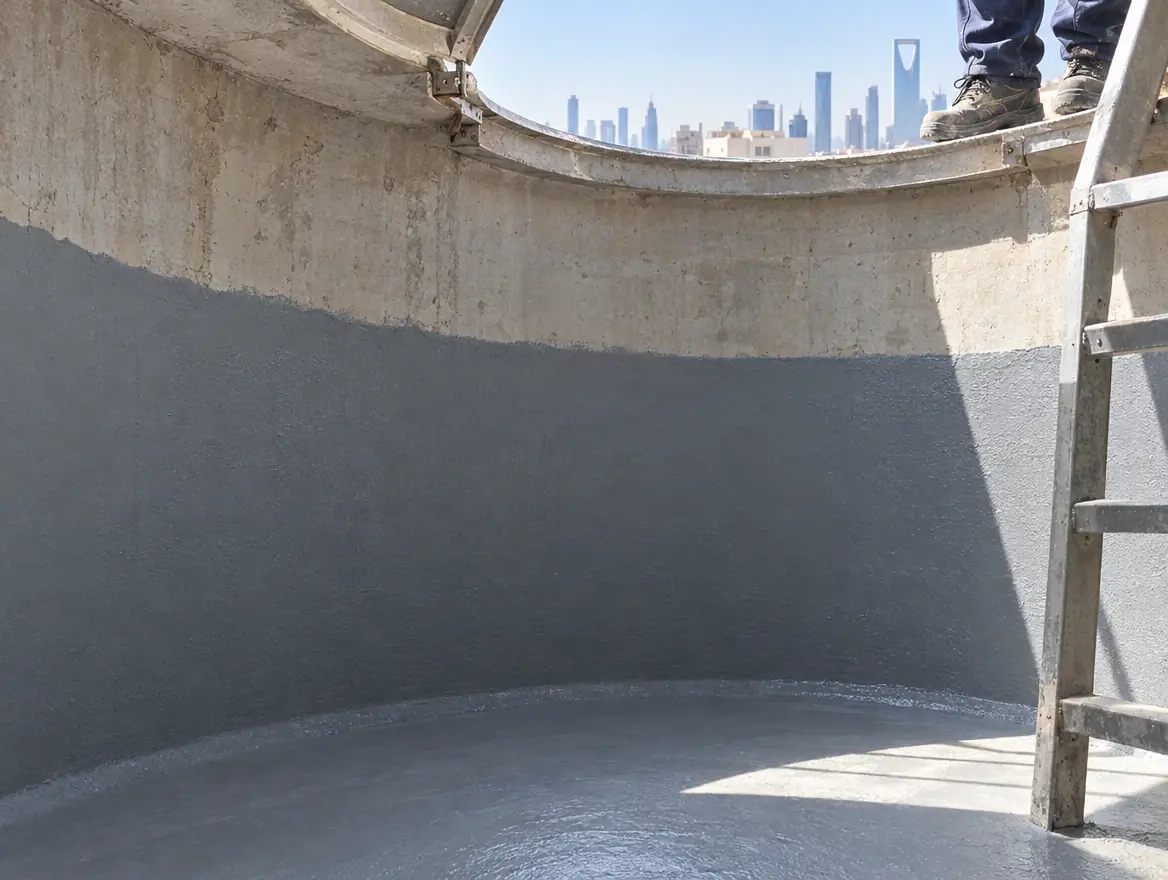
The walls are checked all over for cracks and pores, then the insulation coating is applied to stop water from working into the concrete or fibreglass.
- Tank floor
Sediment collects on the floor and pressure concentrates there, so it is cleaned thoroughly before the coating goes on to make sure the layer bonds to the surface.
- Corners and junctions
The corners where a wall meets the floor or ceiling are the most crack-prone spots in any tank, and they get extra attention in application and reinforcement.
- Interior ceiling
In covered tanks the interior ceiling is sealed along with the other surfaces, as it is exposed to condensed moisture that weakens any protective layer over time.
- Pipe openings and inlets
Around every inlet and outlet pipe there is a junction between two different materials, and that junction is treated with care because it is a common point of leakage.
- Checking after the work
After the coating is complete and has dried, the tank is filled and the water level is watched long enough to confirm that the level is not dropping without explanation.
Four steps, and done
- 1
Call or message us on WhatsApp
+966 54 084 3018 - 2
Tell us what you notice
Tell us whether you notice a water loss, damp patches or a taste change, which district you are in, and the type and rough size of your tank if you know them.
- 3
We agree a time and you prepare
We settle on a time that works for you, and you empty the tank and stop pumping before we arrive, leaving the access opening clear for us to work inside.
- 4
We do the work and you check after
We clean the inner surfaces and apply the insulation to the walls, floor, corners, ceiling and pipe openings, and after drying you fill the tank and watch the level.
Some of our work








What our customers say
Real Google Maps reviews, word for word.
افضل عمال وتنظيف روووعة يعطيكم العافية
Google Maps شركة نظافة ممتازة يعطيكم العافيه
Google Maps يعطيكم العافيه.. شغل ممتاز يستاهلون ٥ نجوم
Google Maps
Questions about Inside-tank insulation
My tank water level drops slowly, will inside insulation stop that?
If the drop is caused by cracks or pores in the inner walls or floor, inside-tank insulation addresses that source directly. If the leak is at external joints or pump pipes the problem is elsewhere, and that is what we work out when you describe what you see to us when you call.
How do I prepare for the inside-tank insulation appointment?
The main step is to empty the tank completely and stop pumping before we arrive. Make sure the access opening is clear and unblocked, and let us know if it is narrow or in an awkward spot so we can come prepared.
Does the tank size change how inside insulation is done?
Yes, the tank size affects the area of inner surfaces to be treated and therefore the scope of the work agreed when you call. A small rooftop tank is different from a large multi-section one, and size is one of the first things we ask about.
What should I check after my tank walls are insulated from inside?
After you refill the tank, watch the water level over a reasonable period and check that there is no new damp on surrounding surfaces such as the ceiling or walls. If you notice any taste change, first confirm the tank was fully drained after drying and then refilled from scratch.
My tank is concrete and my neighbour's is fibreglass, is inside insulation the same for both?
The goal is the same, sealing the inner surface, but concrete is naturally porous and absorbs moisture while fibreglass is smooth and far less porous. That difference determines how the surface is prepared and what coating suits it, which is why we ask for the tank type when you call.
More services under Water tank insulation