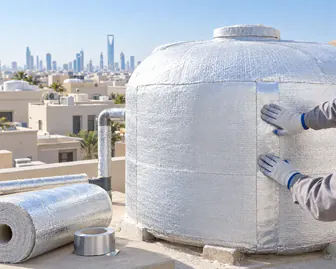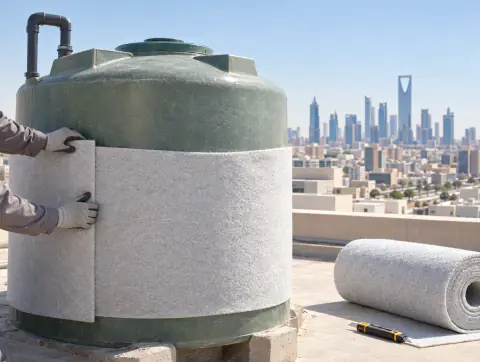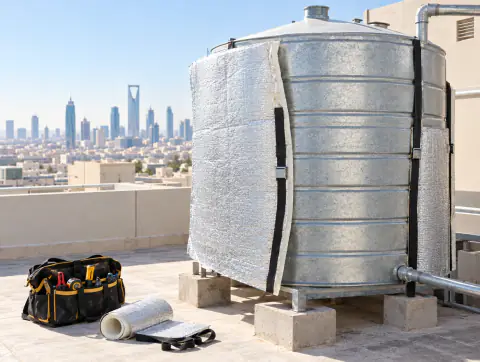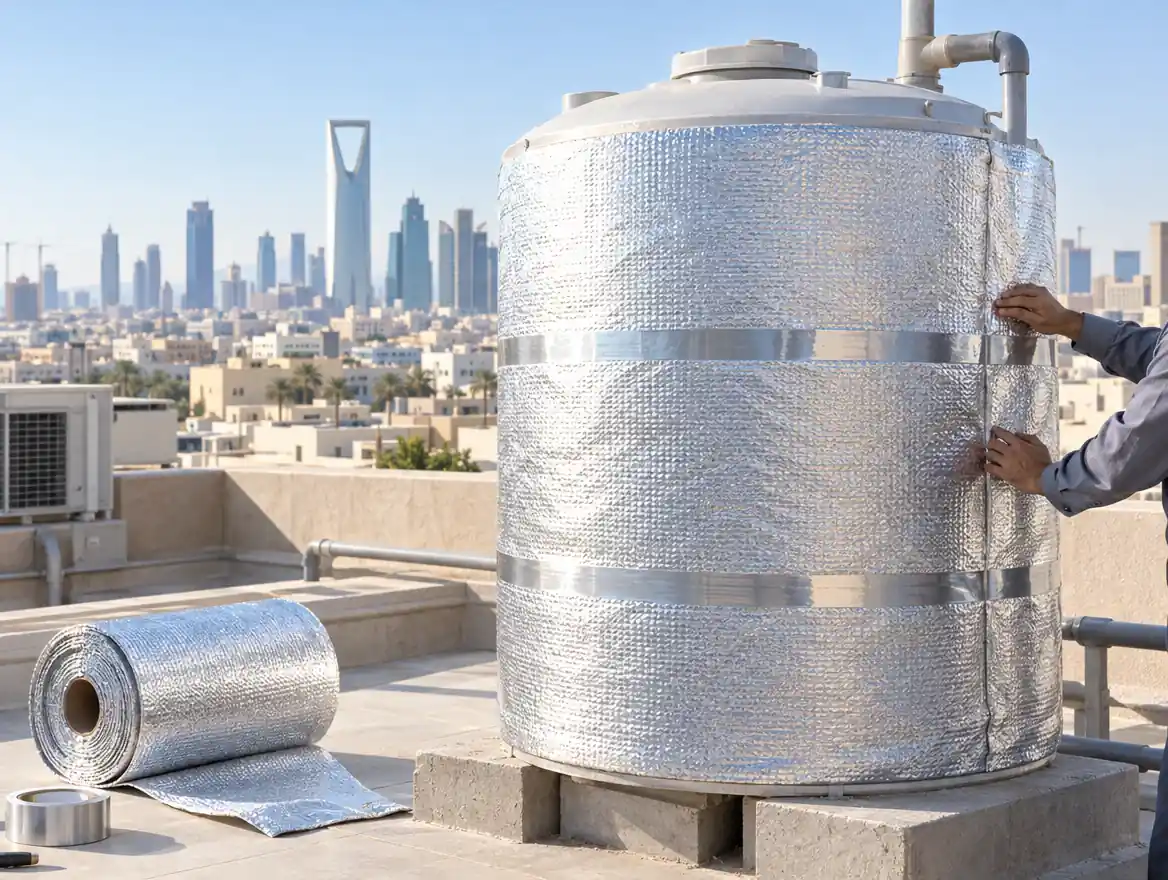
What does outside-tank insulation cover?
A rooftop tank is exposed to the intense summer heat, and that heat expands the outer walls during the day and contracts them at night, opening cracks along the surface, corners and joints. Many of these cracks are invisible from inside the tank, and the owner only notices them when a damp patch appears on the ceiling below or the water level keeps dropping.
Call or WhatsApp us and tell us the type and rough size of your tank, what symptoms you have noticed, and your district, and we agree a time that suits you. We handle the work on the outer surfaces, and you can stop worrying about the tank.
These are the surfaces and parts the work goes through in outside-tank insulation, depending on the condition of the tank and what appears on its walls.
- The four outer walls
We inspect the walls for cracks and branching lines and treat them before applying the insulation layer, because leaving them makes the new layer ineffective.
- The top surface
The top surface gets the most direct sun, so it takes priority in the insulation work, since it is the first area to deteriorate on rooftop tanks.
- Corners and joint lines
The corners between the walls and the base, and between the walls and the roof, are where cracks appear first and need specific treatment before coating.
- Pipe and fitting areas
Water that seeps out often collects around pipe outlets and fittings, and we seal them within the job so no entry point for moisture is left open.
- Base and lower edge
The lower edge where the tank sits on its base or the roof surface traps moisture and is where cracks start without being noticed until they grow.
- Check after drying
Once the insulation layer dries we check that the coverage is complete and that the treated areas show no sign of leaking, and we walk you through what was done.
Four steps, and done
- 1
Call or message us on WhatsApp
+966 54 084 3018 - 2
Tell us about your tank
Tell us the type and rough size of the tank and what you notice, whether that is damp patches, a dropping water level or visible cracks, and which district you are in.
- 3
We agree a time and you prepare
We settle on a time that suits you, and before the visit you empty or lower the water level in the tank as we agree, and make sure the rooftop is accessible.
- 4
We start the work and you check after
We treat the cracks and apply the insulation layer to the outer surfaces, and once it dries you inspect the walls yourself to confirm the moisture is gone and the surface is even.
Some of our work




What our customers say
Real Google Maps reviews, word for word.
يعطيكم العافيه.. شغل ممتاز يستاهلون ٥ نجوم
Google Maps شركة نظافة ممتازة يعطيكم العافيه
Google Maps افضل عمال وتنظيف روووعة يعطيكم العافية
Google Maps
Questions about Outside-tank insulation
How do I know my tank needs insulating from the outside?
The clearest signs are damp patches or drips on the ceiling below the tank with no other obvious cause, or visible cracks on the outer walls and flaking of old coating. Water that heats up quickly in summer and takes on a heat-related smell can also point to weak external thermal insulation.
Do I need to empty the tank before outside insulation?
Outside insulation is done on the outer surfaces, but bringing the water level down allows a closer check of the base corners where some cracks hide. We agree on that with you when you call, depending on the condition and size of the tank.
My tank surface is flaking and crumbling, is that a sign the old insulation has lost its effectiveness?
Flaking and crumbling is a sign the old coating has lost its ability to protect the wall. Before a new layer goes on, the loose old material is removed and the cracks beneath it are treated, otherwise the new layer will not bond properly. That step is part of the job.
What changes the size of the job in outside-tank insulation?
The job is affected by the tank size and number of sides, the extent of cracking on the outer walls, and how easily all surfaces can be reached. A tank in a tight spot needs extra preparation. We ask about these details when you call so we can agree on what suits your situation.
After outside-tank insulation is done, what should I watch in the days that follow?
Watch the ceiling and walls of the room below the tank to check that damp patches are not spreading or reappearing. Also check that the water level stays stable without a noticeable drop. Treated exterior cracks stop widening after the insulation is applied.
More services under Water tank insulation