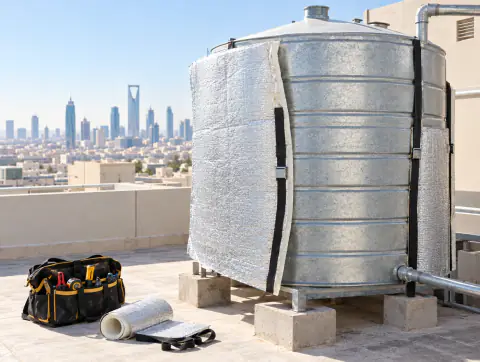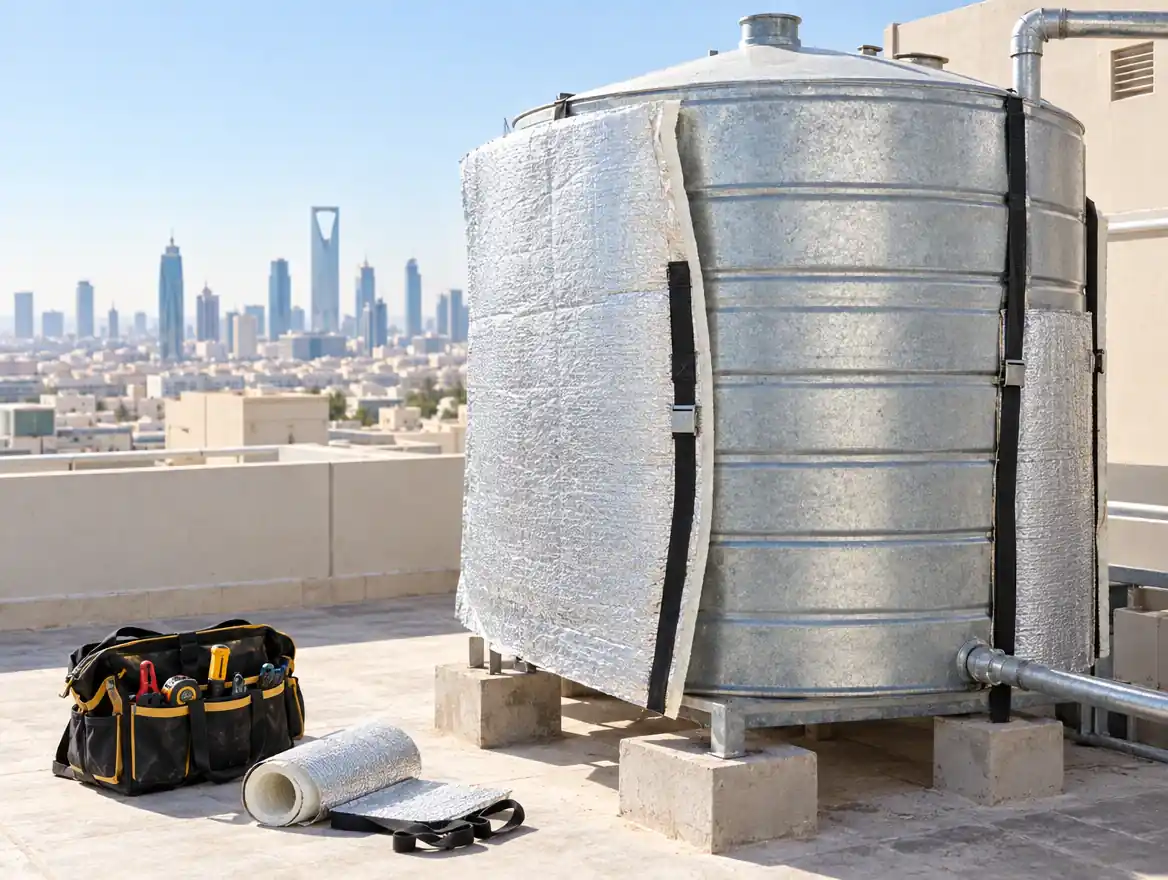
What does steel tank insulation cover?
A steel water tank faces harsh conditions: summer heat above the roof pushes the steel to expand and contract every single day, and the gaps at joints and welds slowly widen. When moisture collects under any corroded patch, the metal wall starts to eat through from within until a leak appears on the outside.
We start by finding out what you notice in your steel tank: visible rust, damp around the base, or a clear leak. Tell us that and your district, and we agree a time to look at the tank and decide what the work needs.
These are the parts the work goes through on a steel tank, depending on its condition and what rust or leaking it shows.
- The outer body surface
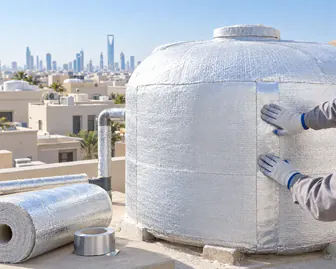
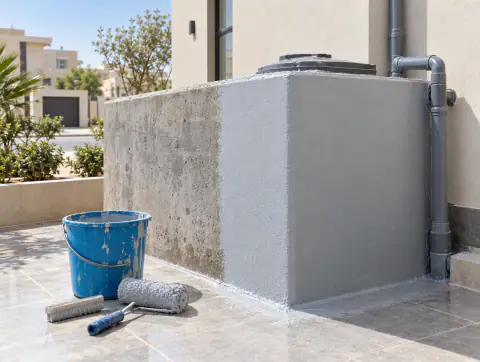
We treat the outer steel surface by removing surface rust before insulating, because insulation laid over untreated rust separates in time.
- Joints and welds
The joints between steel plates and the welds are where gaps open first from thermal expansion, so they get extra attention to seal them properly.
- The base and contact area
The base of a steel tank where it meets concrete or the roof surface traps moisture and accelerates rust from below, and it is part of the insulation area.
- The top lid
The lid takes the strongest heat and direct sun, and is insulated to slow heat transfer to the water and protect its surface from cracking.
- Rust and pitting spots
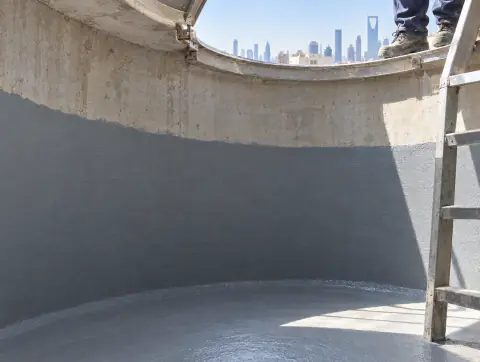
Pitting in the steel wall starts as small points not easy to see, and is treated before it punches through the wall, a necessary step before any insulation layer.
- Pipe openings and inlet pipes
Where pipes enter the tank the steel meets the pipe fittings and the seal is sometimes loose, and we repack these points as part of the work.
Four steps, and done
- 1
Call or message us on WhatsApp
+966 54 084 3018 - 2
Describe the tank to us
Tell us what you see: visible rust, damp around the base or a clear leak, which district you are in and where the tank sits.
- 3
We agree a time and you prepare
We settle on a time, and you empty the tank and close the supply, and make sure all sides of the tank are easy to reach.
- 4
The work and what to check after
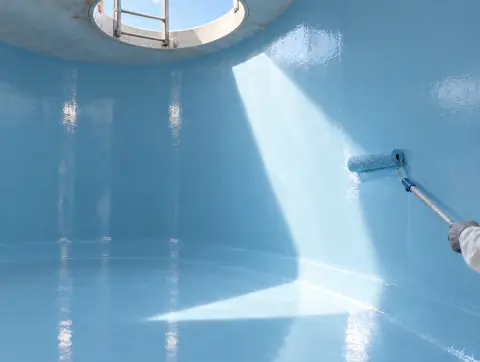
We treat the rust and insulate the surface, joints and base, then you check the tank after completion to confirm the layer is dry and there is no visible moisture.
Some of our work





What our customers say
Real Google Maps reviews, word for word.
يعطيكم العافيه.. شغل ممتاز يستاهلون ٥ نجوم
Google Maps شركة نظافة ممتازة يعطيكم العافيه
Google Maps افضل عمال وتنظيف روووعة يعطيكم العافية
Google Maps
Questions about Steel tank insulation
How do I know my steel tank needs insulation and not just cleaning?
If you see rust on the outer body, notice damp around the base, or wonder why the water heats up fast in summer, those are signs related to the steel wall itself and not to the inside cleanliness. Cleaning removes deposits from within; insulation treats the steel surface and stops rust and leaking.
Is light rust on my steel tank a problem right now?
Surface rust looks minor but deepens with each hot season, as the heat opens the steel's pores and speeds up corrosion. Steel tanks exposed to direct sun rust faster than those in shade. Acting early protects the tank wall before the pitting reaches the stage of leaking.
Can a steel tank be insulated while it still has water in it?
No, the tank has to be emptied and the surface dried before insulation starts, because any layer applied to a wet surface or under water will not bond to the steel. When you call we tell you the exact preparation steps for your tank's size and location.
What changes the size of the job on a steel tank?
The tank's size and surface area affect the job, as does the depth of the rust and the number of pitting spots, and how easy it is to reach all sides including the top, base and both sides. Exposed rooftop steel tanks generally need more treatment than those sheltered from direct sun.
After my steel tank is insulated, what should I watch for in the days after?
Watch the outer surface to make sure the insulation layer has dried fully before you refill the tank. After refilling, check for any moisture at the base, along the joints and around the pipe openings. If you notice anything unusual, let us know when you get in touch.
More services under Water tank insulation