What does ground-tank insulation cover?
A ground tank sits below floor level, surrounded by soil on its sides and base. The sandy soil shifts under the summer heat and presses on the concrete walls, opening fine cracks that let water seep in or out. A tank losing water slowly is not obvious until you notice the level dropping with no clear reason.
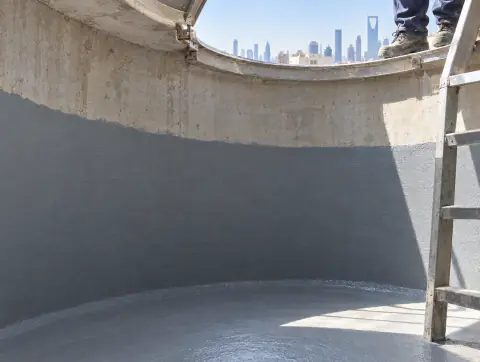
We insulate the ground tank along the inner walls, the floor and the ceiling, paying close attention to the corners and joints where leaks usually begin. Call or message us on WhatsApp, tell us your district, the size of the tank and what you have noticed, and we agree a time that suits you.
These are the surfaces and points the insulation covers in a ground tank, depending on its condition and where cracks or damp appear.
- Inner walls
The inner walls are the most exposed surface to built-up damp and vertical cracks, and insulating them stops water at the wall before it moves into or out of the surrounding soil.
- Tank floor
The floor touches the soil directly and takes the water pressure above and damp soil pressure below, so it receives a separate insulation layer suited to that two-way load.
- Tank ceiling
The ceiling absorbs rising moisture from inside, and water vapour condenses on it, speeding up concrete deterioration if it is left without insulation.
- Corners and joints
Where walls meet the floor and the ceiling is where seasonal soil movement opens cracks first, so these joints take extra time to seal properly.
- Visible cracks
Any visible crack in the tank body is treated before the general insulation layer goes on, because covering an untreated crack does not stop the leak, it only delays it.
- Exposed outer wall
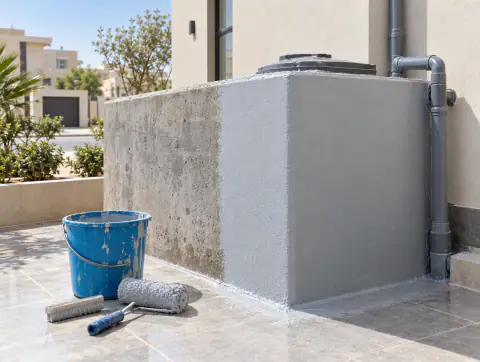
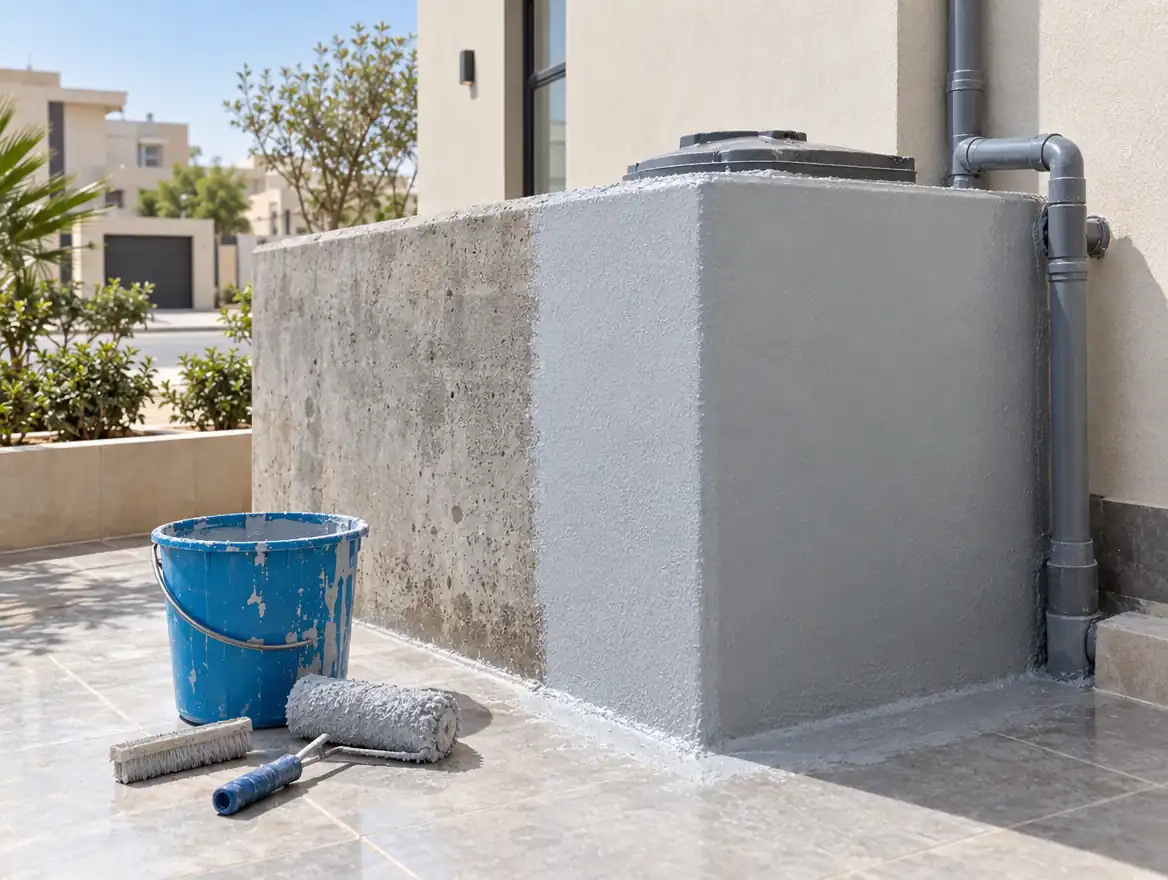
If part of the outer wall sits above ground level, it is insulated from the outside too, to stop moisture entering through the face exposed to air and heat.
Four steps, and done
- 1
Call or message us on WhatsApp
+966 54 084 3018 - 2
Tell us about your tank
Tell us what you see: a leak, damp patches or a dropping water level, the size of the tank and which district it is in.
- 3
We agree a time and you prepare
We settle on a time, and you empty the tank of water beforehand, and make sure the entry hatch is accessible and the space is ventilated.
- 4
We insulate and check
We treat the cracks and insulate the walls, floor, ceiling and joints, then you check the surface with us once it has dried, before filling the tank again.
Some of our work















What our customers say
Real Google Maps reviews, word for word.
صراحة ممتازين جدا ويهتمون بأدق التفاصيل .. وجدا متعاونين الله يباركلهم .. من أفضل الشركات اللي تعاملت معاها
Google Maps افضل عمال وتنظيف روووعة يعطيكم العافية
Google Maps يعطيكم العافيه.. شغل ممتاز يستاهلون ٥ نجوم
Google Maps
Questions about Ground-tank insulation
My ground tank loses water slowly, is that a leak?
Yes, slow water loss in a ground tank is a common sign of a fine leak in the wall, floor or joints. Sandy soil absorbs the escaping water and hides it, so there is no obvious wet patch on the surface. If you notice the level dropping with no clear reason, inspection and insulation are the right step.
Does the ground tank need to be empty before insulation?
Yes, emptying the tank is essential before insulating from the inside, because the surfaces must be dry and clean for the insulation material to bond to the concrete properly. When you call we agree a time that gives you room to empty it before we arrive.
What do I check after my ground tank is insulated?
After the curing period, refill the tank and watch the level for several days to confirm it holds steady. Also look for damp patches on the walls or floor around the outside of the tank. Let us know straight away if you notice anything unusual after refilling.
How does ground-tank insulation differ from rooftop-tank insulation?
A ground tank is surrounded by soil and faces soil pressure and groundwater, so corners, floor and joints get particular attention. A rooftop tank is exposed mainly to intense sun and wall expansion. Each has its own separate service listed below.
What changes the scope of work in ground-tank insulation?
The size and depth of the tank, the number of visible cracks and the condition of the concrete all affect the work area and preparation time. Access to the entry hatch and adequate ventilation inside also play a part. We ask about all of this when you call so we can agree on what suits your situation.
More services under Water tank insulation