
What does black marble polishing cover?
Black marble reflects light at depth, and that is exactly why a fine scratch or a chalky water mark shows up so clearly on it. The fine dust carried in the air leaves a trace on dark surfaces faster than you would expect, and calcium-rich tap water leaves grey-white deposits when it dries on a dark stone floor or wall.
Call or WhatsApp us and tell us what you notice on your black marble and which district you are in, and we will agree a suitable time with you.
These are the parts the work covers in black marble, depending on the condition of the surface and what you notice in it.
- Reading the dark surface
The surface is inspected from different angles to map fine scratches and lime deposits before work begins, because black marble reveals every mark under raking light.
- Removing white deposits
White marks on black marble are mostly calcium deposits from water, and they are treated before polishing so they are not pressed into the surface and left visible.
- Buffing out fine scratches
The hair-fine scratches that show on a dark surface are worked out in stages, starting at a grit coarse enough for the depth of the scratch and stepping finer from there.
- Polishing the depth of colour
Polished black marble does not only look shiny, it looks deep in colour, and that comes from completing every stage of polishing in sequence, stepping through each grit without skipping.
- Edges and corners
The edges of black marble tiles and wall corners collect dust and show scratches too, and they are polished along with the rest of the surface so the finish is even.
- Checking the light reflection
After finishing, the surface is viewed from different angles in the light to check that the reflection is even and that the scratches you noticed are gone.
Four steps, and done
- 1
Call or message us on WhatsApp
+966 54 084 3018 - 2
Tell us what you notice
Tell us where the black marble is in your home, what you notice in it, whether scratches, white marks or general dullness, and which district you are in.
- 3
We agree a time
We settle on a time that suits you, and you clear the area of light furniture, rugs and anything that can be moved away from the marble surface.
- 4
We work and check with you
We buff the scratches, treat the white marks and polish the surface stage by stage, then look at the reflection with you from different angles to confirm the result.
Some of our work



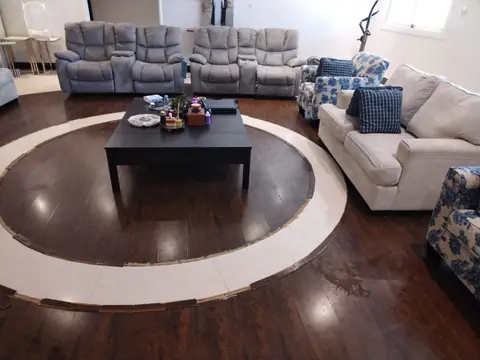









What our customers say
Real Google Maps reviews, word for word.
صراحة ممتازين جدا ويهتمون بأدق التفاصيل .. وجدا متعاونين الله يباركلهم .. من أفضل الشركات اللي تعاملت معاها
Google Maps افضل عمال وتنظيف روووعة يعطيكم العافية
Google Maps شركة نظافة ممتازة يعطيكم العافيه
Google Maps
Questions about Black marble polishing
How do I know my black marble needs polishing rather than something else?
If you see hair-fine lines on the dark surface, white or grey marks that do not come off with cleaning, or you notice the mirror-like reflection has gone, these are signs the marble needs polishing. If there is a crack or a chip, that is assessed when you call to see whether restoration comes first.
Where do the white marks on black marble come from?
Tap water carries calcium and magnesium, and when it evaporates on black marble it leaves pale white deposits that show up clearly against the dark background. These deposits do not come off with normal wiping, and they are treated at the start of the polishing session before the polishing itself begins.
What should I prepare at home before black marble polishing day?
Move rugs off the surface to be polished, and take light furniture, plants and small items out of the area. If the marble is in a villa entrance or a semi-enclosed corridor, let us know when we agree the time so we can account for the access.
Does polishing black marble on walls differ from polishing it on floors?
Yes, floors take foot traffic and friction and often need deeper grinding, while walls and thresholds tend to show lime deposits and lighter scratches more. Both are polished, but the approach is set after reading the surface, which is why we ask where the marble is when you call.
After polishing, how do I know the scratches have really gone?
The easiest way is a low light source at a raking angle across the surface: a scratch will show under that light if it is still there. We look at the surface with you this way after finishing, and if you see something that needs another pass we agree the next step.
More services under Marble polishing & restoration