What does reptile control cover?
Reptiles are active in the warmer months and are drawn to places that combine warmth, shelter and some moisture: under large stones, along old walls, in drainage openings and in dense plant cover. When one reptile appears, it is usually a sign the spot offers what it is looking for, not that it arrived by accident.
Call or message us on WhatsApp, tell us your district and describe what you saw and exactly where, and we agree a time to inspect and treat. Leave the rest to us.
These are the spots and steps the work goes through, depending on the layout of your property and what you have noticed in your home or garden.
- Checking gathering spots
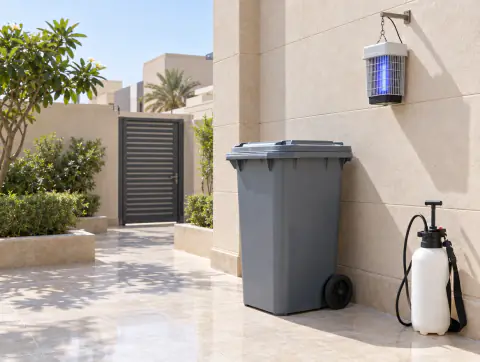
We inspect the places reptiles tend to favour: under stones and paving, along wall edges and in damp shaded corners, to identify exactly which spot is drawing them.
- Gaps and entry points
We check drainage openings, wall cracks and the gaps under doors, as these are the routes reptiles use to move between the garden and the building.
- Dense plants and soil
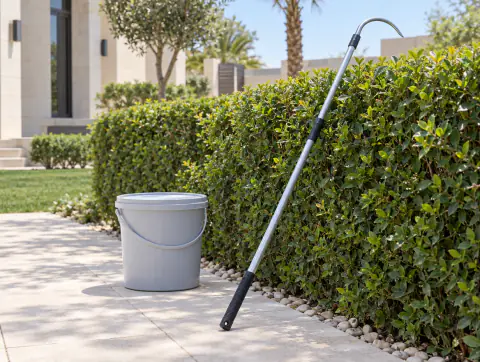
Untrimmed plants and the moist soil beneath them offer safe cover for reptiles, and we check them during the visit to see whether they are the source of the problem.
- Treating hiding places
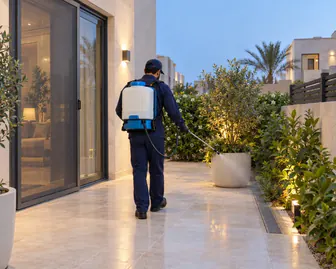
We treat the spots we identified to deter reptiles from them, concentrating on the edges and openings the inspection showed are most used.
- Entrances and building perimeter
We treat the outer perimeter of the building, with attention to the main entrance and the surrounding paths, to reduce the chance of reptiles moving inside.
- What to check afterwards
After treatment, watch the spots we pointed out to you: if sightings drop the treatment has worked, and if they continue in one particular spot, let us know.
Four steps, and done
- 1
Call or message us on WhatsApp
+966 54 084 3018 - 2
Tell us what you saw
Describe the reptile you saw and exactly where, whether in the garden, near a wall or elsewhere, and tell us which district you are in, so we can prepare for the visit.
- 3
We agree a time and you prepare
We agree a time that works for you, and you clear any furniture or items from the areas we will inspect, and keep children and pets away from those areas while we work.
- 4
Inspection and treatment
We inspect the likely spots and treat them, then point out to you the places worth watching after the visit to catch any renewed activity.
Some of our work






What our customers say
Real Google Maps reviews, word for word.
يعطيكم العافيه.. شغل ممتاز يستاهلون ٥ نجوم
Google Maps شركة نظافة ممتازة يعطيكم العافيه
Google Maps افضل عمال وتنظيف روووعة يعطيكم العافية
Google Maps
Questions about Reptile control
I saw a reptile once in the garden; is that enough reason to call?
Yes, seeing one reptile in the garden or near a wall is reason enough to inspect. Reptiles do not stay somewhere unless it offers warmth, shelter or food, so a single sighting usually means the spot suits them. Identifying it early is easier than waiting for sightings to repeat.
How do I know where reptiles are entering my garden or building?
Reptiles normally move through drain openings, wall cracks and the gaps under gates and doors, and they prefer routes close to wall edges rather than open ground. During the inspection we trace these likely paths and identify the openings that need treatment.
What should I prepare in the garden before the reptile control visit?
Move large decorative stones, stacked boxes and tools away from the spots you suspect, and trim dense plants if you can. Keep children and pets out of the work area throughout the visit. Also tell us exactly where you saw the reptile.
Does treating reptiles inside the building differ from the garden?
Yes. In the garden we focus on outdoor gathering spots, movement paths and wall edges. Inside the building we start by locating the entry point and closing it, then treat the affected area. That is why we ask when you call whether the reptile was spotted in the garden or indoors, so we can prepare the right approach for each case.
Why do reptiles come back to the garden after treatment?
If the conditions that attracted them in the first place remain, such as dense plants, ongoing moisture or open gaps, they are likely to return. Treatment deters them from the spots we treated, but closing entry points and removing attractants is what reduces the chance of return, and we point this out after each visit.
More services under Mosquito, fly & reptile control