What does bee control cover?
Bees do not settle at random. A colony scouts for a crack in a wall, a gap under a roof overhang or a space behind a façade panel, and builds its hive there. Swarms are more active in the warmer months, when a group breaks away from an existing colony to find a new site, and that site can turn out to be part of your building before you notice.
When you call or message us on WhatsApp, tell us exactly where the swarm or hive is and which district you are in, and we agree a time that suits you. Leave the bees to us and keep yourself and the rest of the household away from the area.
These are the locations and steps the work goes through, depending on the type of gathering, where it is, and the size of any hive present.
- Locating the swarm
We check the area you pointed to in order to identify whether it is a temporary swarm resting on a surface or an established colony inside a gap, because the approach differs between the two.
- Treating an outdoor swarm
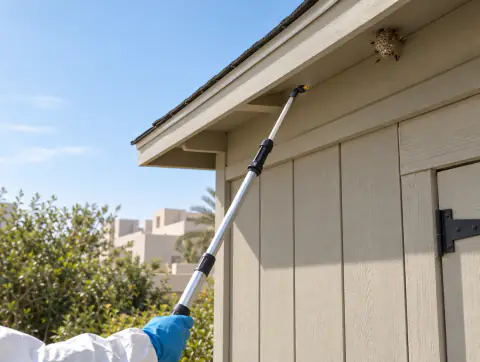
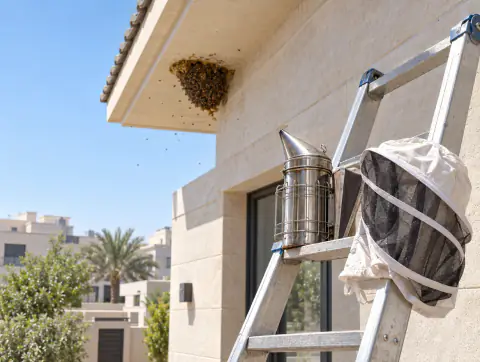
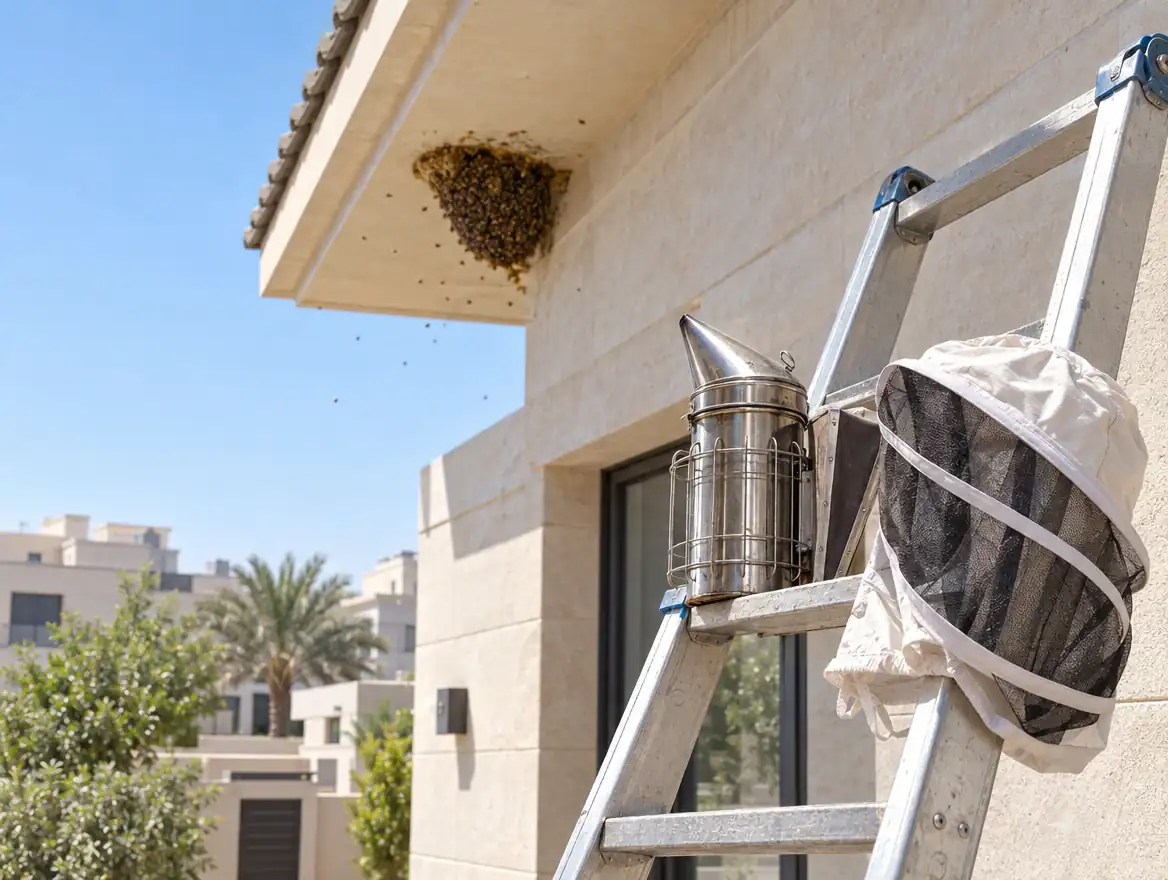
A temporary swarm clusters on a branch, wall or external corner while it scouts for a permanent site, and treating it at this early stage stops it from moving into the building structure.
- Hive inside walls
Bees build their comb inside wall cavities quickly, and the wax and honey left behind the wall attracts other insects later if the hive is not removed completely.
- Gaps and entry cracks
We inspect the openings the bees used to enter and note their positions, because sealing them after treatment stops a new swarm from using the same route.
- Building façades and rooftops
Detached façade panels, external light fittings and the gaps under roof parapets are common spots residential buildings, and they need careful inspection to judge how deep the colony has settled.
- What the hive leaves behind
After the bees are removed, wax residue and the scent of honey remain inside the cavity, and these draw new swarms back to the same spot unless the space is cleaned and sealed.
Four steps, and done
- 1
Call or message us on WhatsApp
+966 54 084 3018 - 2
Tell us what you saw
Describe where the bees are as precisely as you can: on the façade, inside a wall, or in the garden, and tell us which district you are in.
- 3
We agree a time
We settle on a time that suits you; while you wait, keep away from the area and close any windows and doors near it.
- 4
We work and you check after
We treat the swarm location or the hive; after we finish, check that there is no further bee activity and let us know if you notice anything.
Some of our work









What our customers say
Real Google Maps reviews, word for word.
افضل عمال وتنظيف روووعة يعطيكم العافية
Google Maps يعطيكم العافيه.. شغل ممتاز يستاهلون ٥ نجوم
Google Maps شركة نظافة ممتازة يعطيكم العافيه
Google Maps
Questions about Bee control
How do I know whether bees have built a hive inside a wall?
Signs include a continuous buzzing sound from inside a wall or ceiling, bees regularly entering and leaving through a small crack, and yellowish greasy marks near the crack where wax or honey is seeping through the wall. If you see any of these, a hive is most likely already established.
Is a swarm resting on the façade an immediate danger?
A temporary swarm usually stays put while scouts search for a new site, and it may rest for hours or days before moving. It is, however, a short window to deal with it before it finds a gap in the wall or ceiling and becomes an established hive that is harder to remove.
What do I prepare before you come for bee treatment?
Keep household members and pets away from the area around the swarm or hive, and close nearby windows and doors. If the hive is in an exposed outdoor area, mention it when you call so we can prepare accordingly.
Why do bees return to the same spot after treatment?
Bees return because the scent of wax and honey remains in the cavity even after the hive is removed, and that scent attracts new swarms to the same location. Cleaning out the remaining hive material and sealing the entry points after treatment is an important step that prevents the problem from recurring.
Does a swarm on a garden tree need the same treatment as a hive in a wall?
The two situations are different. A swarm on a tree is usually a temporary cluster that has not yet built comb or brood, while a hive inside a wall is an established structure that grows over time. We ask you for the details when you call in order to decide the right approach for each case.
More services under Pest control