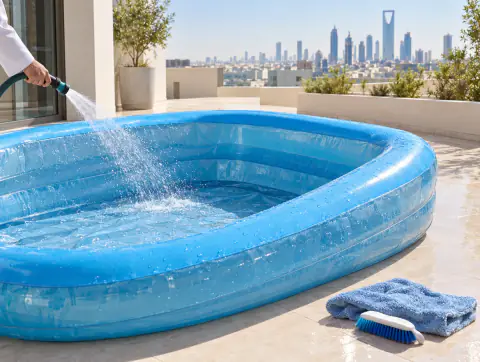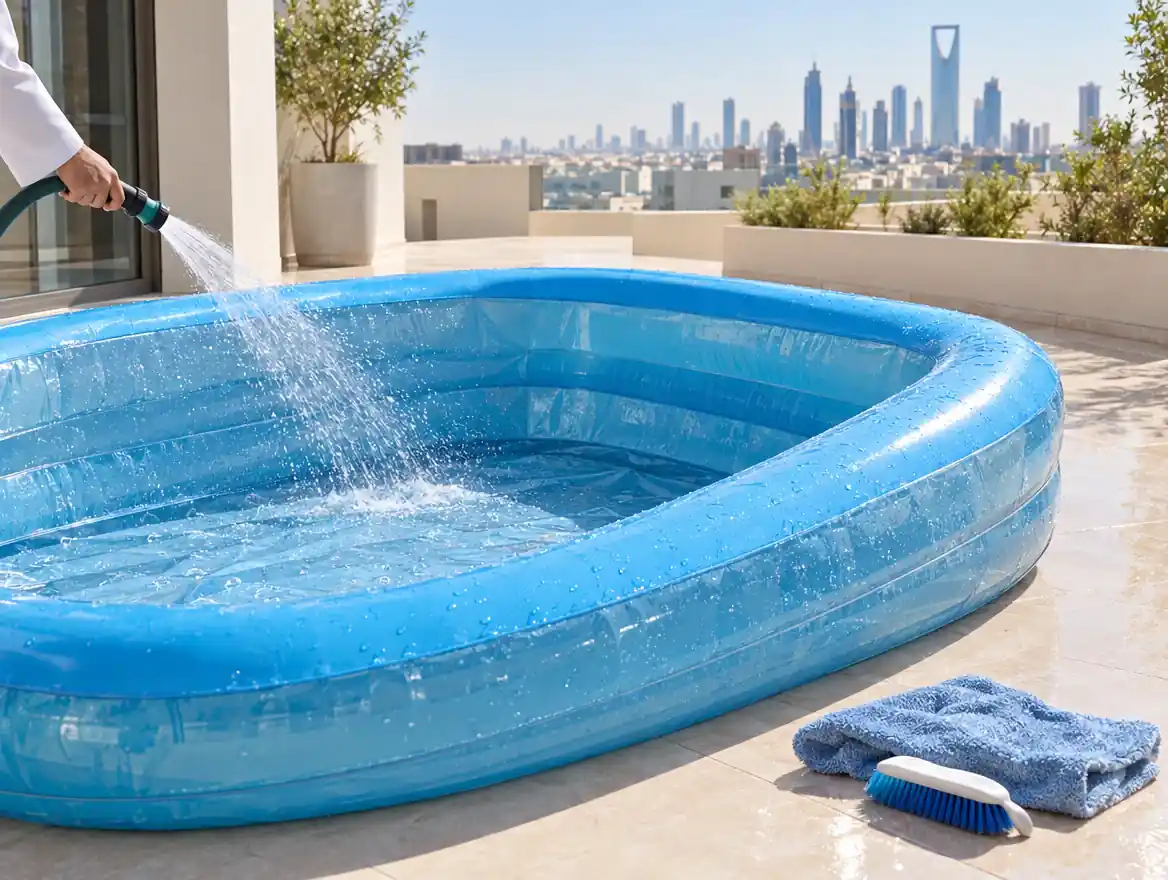
What does inflatable pool cleaning cover?
An inflatable pool is made from flexible PVC layers, and dirt collects in its folds and along its lower edge. The fabric creases when the pool is pressed or deflated, and those creases trap grit and algae faster than a concrete surface would. Standing water combined with the summer heat speeds up the growth of green algae and yellow deposits along these surfaces.
Tell us what you see in your pool, whether that is a colour change on the walls, an unpleasant smell, or sediment on the floor, and tell us your district. We agree a time with you and take care of the cleaning inside and out.
These are the parts the cleaning covers in an inflatable pool, depending on its condition and what you notice in it.
- Inner walls
We scrub the inner surface to remove algae and coloured deposits clinging to the PVC layer, because leaving them makes removal harder later and stains the fabric.
- Pool floor and folds
Fine sand and dust settle in the pool floor and in the lower fabric folds, and we make sure to remove them fully because they are what turns the water cloudy quickly.
- Top ring and air chamber
We wipe the inflated top ring inside and out, the part that gathers the most dust and heat because it is exposed to sun throughout the day.
- Air valves
We inspect the valves and clean dust from their edges, because grit around a valve prevents a good seal and leads to slow air leaks over time.
- Outer wall
We wipe the outer surface of dust and marks, as the outer wall picks up fine dust quickly because it faces the open air.
- Pump and filter connections
We check that the inlet and outlet connections are clear when the pool has a filter, because dirt at those points reduces how well the filter works.
Four steps, and done
- 1
Call or message us on WhatsApp
+966 54 084 3018 - 2
Describe the pool to us
Tell us what you notice: algae on the walls, cloudy water, or an unpleasant smell. Give us an approximate size and your district.
- 3
We agree a time
We settle on a time that suits you. Empty the water before we arrive if you can, and make sure there is space to reach all sides of the pool.
- 4
We work and you check after
We clean the walls, floor, valves and connections, then you check the inner surface yourself to confirm the deposits are gone before filling the pool again.
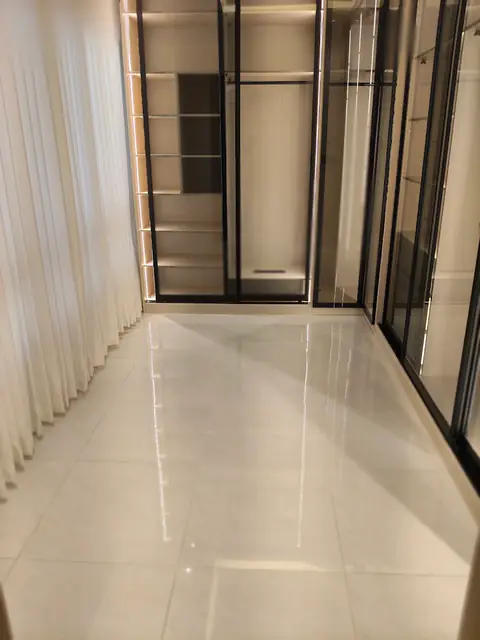
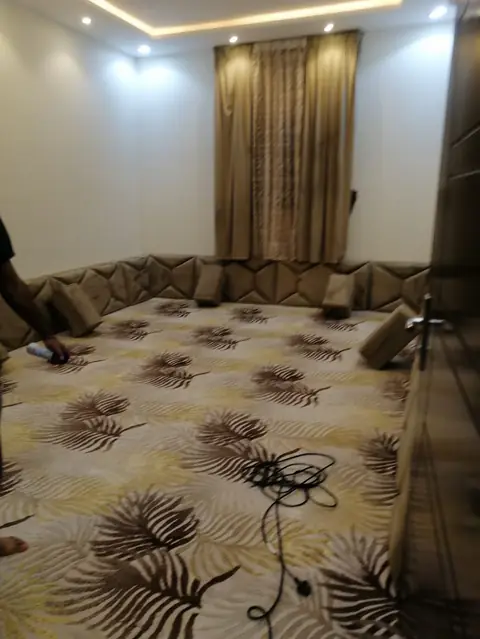
Some of our work
What our customers say
Real Google Maps reviews, word for word.
صراحة ممتازين جدا ويهتمون بأدق التفاصيل .. وجدا متعاونين الله يباركلهم .. من أفضل الشركات اللي تعاملت معاها
Google Maps شركة نظافة ممتازة يعطيكم العافيه
Google Maps يعطيكم العافيه.. شغل ممتاز يستاهلون ٥ نجوم
Google Maps
Questions about Inflatable pool cleaning
How do I know my inflatable pool needs cleaning now?
The clearest signs are a green or yellow layer on the inner walls, sand and deposits on the floor you can feel, or water that turns cloudy soon after filling. If the pool sat filled for a long time without use in the heat, algae can grow even when the water looks clear at first.
Should I empty the water before the cleaning appointment?
Emptying the water beforehand makes it easier to reach the floor and walls and gives a more thorough clean. If you cannot do it before we arrive, tell us when you call so we can agree the best approach for your situation.
What should I check on the fabric surface after cleaning?
After cleaning, run your hand over the inner wall: it should feel smooth with no slippery or rough patch. A slippery patch means algae residue, a rough patch means mineral deposits from the water, and in either case tell us before you refill the pool.
What changes the job between a small and a large inflatable pool?
A smaller pool has less inner surface area, but its folds can be proportionally more numerous because of how the fabric is arranged. A larger pool has wider walls and a floor that takes longer to cover. Tell us the approximate size when you call so we can agree on the details.
Does cleaning an inflatable pool in the garden differ from one kept indoors?
A pool kept in the garden is exposed to the dust and direct heat, so fine dust builds up faster and hardens on the outer surface. An indoor pool accumulates dust more slowly, but trapped humidity can speed algae growth on the inner wall. In both cases, we start by hearing what you describe when you call.
More services under Swimming pool cleaning